
Why I Keep Jumping In
I'd Rather Feel the Shock Than Wonder What Might Have Happened

Every breakthrough starts with a moment of discomfort you decide to face.
Outdoor swimming is more than a hobby for me. It’s what gets me out of bed in the morning. There’s something about that first rush of cold water that wakes up every nerve and makes me feel completely alive. I’ll often travel or walk quite a distance for a good dip to a loch, a river or the sea. Each one feels different and leaves its own mark.
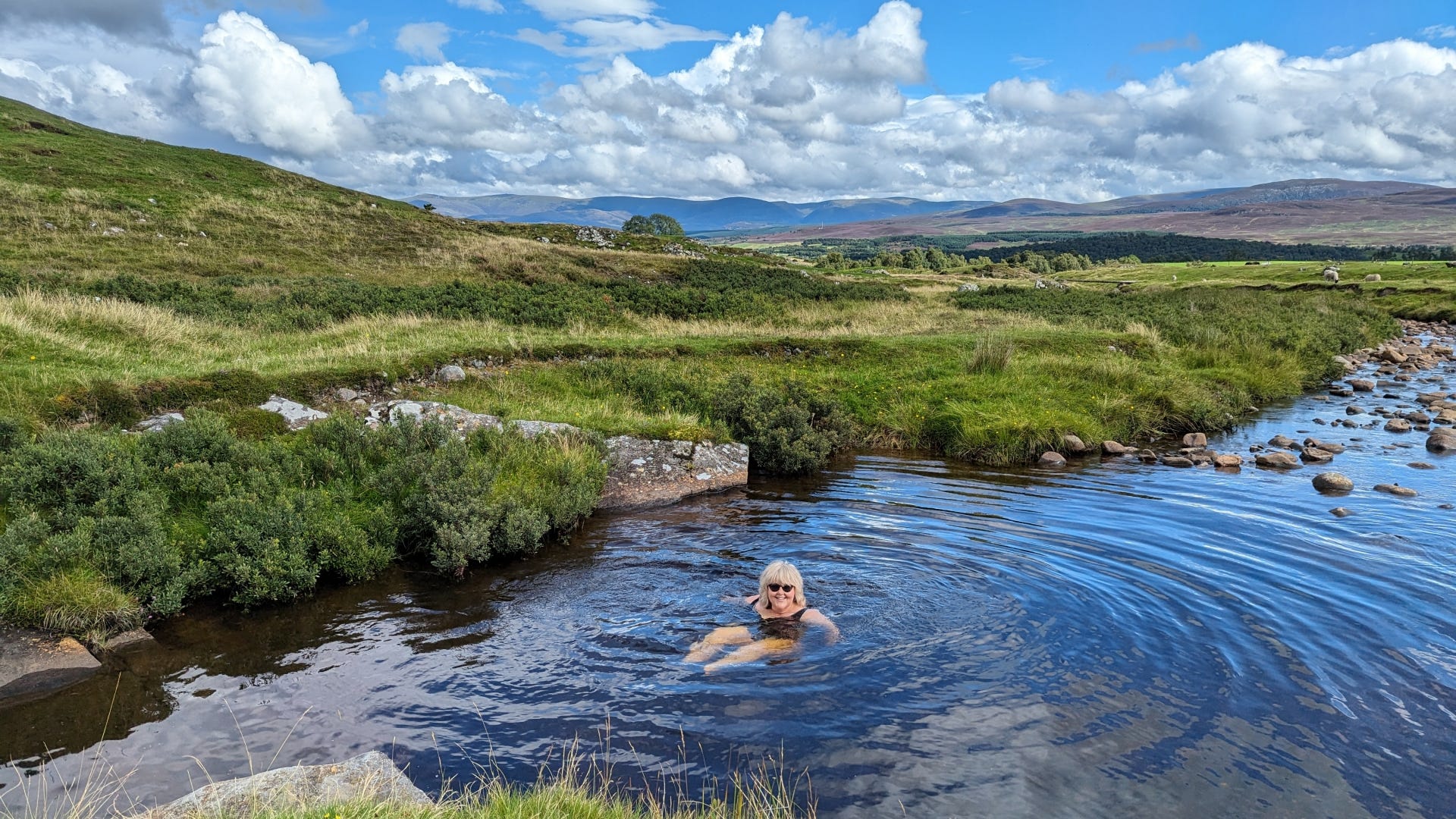
Here in Scotland the water is rarely warm, and the weather’s never quite predictable, but that’s part of the magic. Some mornings the air is crisp enough to wake you before you’ve even touched the water. On the stillest days, the loch turns to glass and reflects the sky and hills back at you in perfect symmetry.
I’ll stand at the edge and hesitate, because that first plunge is never pleasant. The shock takes my breath away and tenses every muscle in my body. I usually yell at the top of my lungs, though thankfully there’s rarely anyone around to hear me. Then, a few seconds in, something shifts and everything settles. My focus narrows to almost nothing else. It’s uncomfortable, though there’s a kind of freedom in it too, one that’s hard to explain until you’ve felt it for yourself.
I used to think the cold water was the hard part, but I’ve since realised it isn’t. The hard part comes before that, in the moment when I’m still dry and could easily talk myself out of everything.
That moment has nothing to do with temperature. It happens every time I’m about to publish something, when I read it over one more time. The rereading is rarely about fixing anything. It’s about buying myself another minute before I have to let go.
I’m experiencing this right now with a book I’m finishing. The reality is that the majority of the book is written by other amazing contributors, so my part is actually quite small. But instead of just putting it out there, I keep overthinking it. I'm spending days tweaking lines I've already changed numerous times, fixing things that probably don't even need to be fixed, just to avoid that final dip.
For years I assumed hesitation was a time management problem. I thought the right system would eventually fix it. I no longer believe that. Most of the time, what looks like procrastination is a rational response to a real risk. That risk is being seen and judged for what you’ve made.
Take what happens when you delay a launch. My business partner and I once spent months building a membership site. Every time we got close to ready, we’d find one more thing worth improving before it felt safe to release. We told ourselves we were being thorough. By the time we were finally happy with it, the digital landscape underneath us had moved. The whole project needed reworking from the ground up.
Looking back, part of us must have known the truth. As long as we kept building, we’d never have to find out whether it worked.
Once you notice that pattern, you start seeing it everywhere. Your emails sit in drafts for days, and it’s not for lack of time. Instead, they sit there because hitting send invites a response, or the silence of no response at all. A sales page you’re creating stays “almost ready” for six weeks. And of course, adjusting a headline is easier than finding out if anyone actually wants what you’re selling.
I did the same thing with my own writing for months before I started this newsletter.
I told myself I hadn’t found the right voice yet, and that the format and the schedule still needed work. All of that was technically true. But underneath it, I was protecting myself from something simpler. If I published, I might find out nobody read it, or that someone did and thought it was nothing special. Staying in the drafting stage meant I never had to find that out. The moment I hit publish for the first time, that protection was gone. It felt like the second before hitting cold water, just as unpleasant and just as needed.
This is why willpower advice misses the point so often.
Sending an email doesn’t take more discipline. It takes getting honest about what you think will happen once it’s sent. The thing you’re afraid of is almost never as bad as not knowing at all. Silence is uncomfortable, but guessing forever is worse than any answer you’d get.
Swimming has taught me to close that gap between deciding and doing. That’s because I’ve learned the anticipation is always worse than the water itself. The fear peaks in the seconds before you go in, not after.
Business works the same way, once you let yourself see it. The dread of sending a launch email is almost always bigger than anything that happens once it’s out.
I’ve never regretted going in, cold water or otherwise. What I’ve regretted are the mornings I stood at the edge and talked myself out of it. Those are the only ones that left nothing behind.
If there’s something you keep tweaking instead of releasing, ask yourself why. Most of the time you already know, and it’s nothing to do with the thing not being ready.
Tomorrow, before you open your laptop, ask yourself one honest question.
What am I afraid this will tell me about myself, or about my audience, if I finally put it out there?
Then go in anyway. The water is never as bad as standing at the edge.